
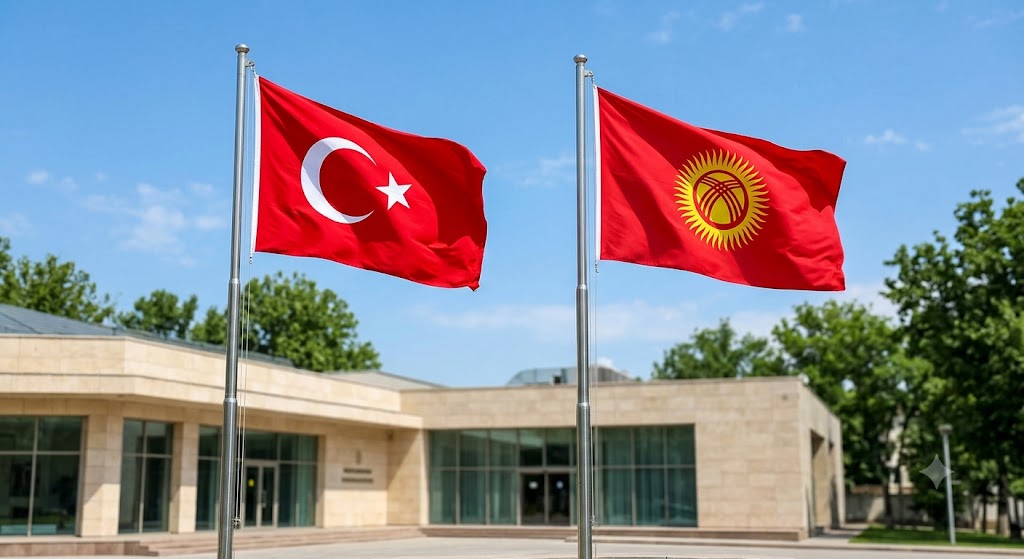
Türkiye and Kyrgyzstan have pledged to enhance their bilateral relations by broadening cooperation in various sectors such as trade, investment, transportation, and regional connectivity. This commitment was declared after the seventh meeting of the Türkiye-Kyrgyzstan Joint Strategic Planning Group held in Ankara, with both countries’ foreign ministers at the helm.
During the meeting, officials evaluated the progress made in their bilateral relations and concurred on the necessity to intensify collaboration in pivotal areas, including education, cultural exchanges, and economic development. Preparations for upcoming reciprocal visits by Kyrgyz President Sadyr Japarov and Turkish President Recep Tayyip Erdoğan were also part of the discussions. Economic collaboration emerged as a top priority, with both nations agreeing to support new investment ventures and initiatives to foster a conducive environment for businesses. Additionally, they resolved to enhance travel, employment, and educational opportunities to fortify people-to-people connections.
A significant focus of the discussions was regional connectivity, with Kyrgyzstan underscoring the importance of the Middle Corridor as a crucial transport route. The country plans to integrate the China–Kyrgyzstan–Uzbekistan railway with this corridor, aiming to facilitate better access to European and Middle Eastern markets via Türkiye. Such strategic initiatives are poised to bolster trade routes and economic ties across the region.
Security issues on both a regional and global scale were also addressed, with both nations reaffirming their dedication to resolving conflicts through dialogue, diplomacy, and adherence to international law. Türkiye’s role in mediation efforts within the region was lauded by Kyrgyzstan, which also expressed gratitude for Türkiye’s support in its successful bid for a non-permanent seat on the United Nations Security Council for the 2027–2028 term.
Looking ahead, Kyrgyzstan conveyed its intention to advocate for dialogue among nations while representing the interests of landlocked developing countries, mountainous nations, and small island states on the global stage. This commitment highlights the country’s proactive approach to fostering international cooperation and addressing the unique challenges faced by these states.