
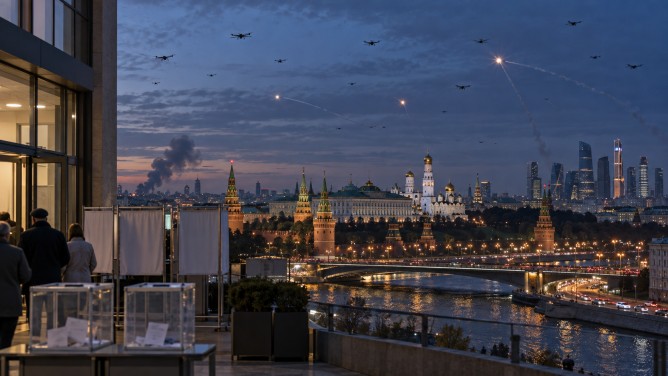
In a significant escalation of tensions, Ukraine’s overnight drone offensive left a trail of destruction across Russia, with Moscow bearing the brunt of what officials are calling the largest drone attack on the capital to date. The strikes resulted in damage to vital infrastructure, including the Moscow Oil Refinery and a residential building, while claiming the lives of two individuals and injuring 20 others in the wider Moscow region, according to local authorities.
The attacks, which coincided with the final day of Russia’s parliamentary elections, have raised concerns about the disruption of the electoral process. Moscow Mayor Sergei Sobyanin reported that around 450 drones were intercepted as they approached the city, accusing Ukraine of attempting to interfere with the elections. These elections were also held in Ukrainian territories that Russia claims, a move Kyiv has denounced as illegal.
Ukraine’s President Volodymyr Zelensky stated that the operation utilized drones and domestically produced weapons, targeting oil and logistics facilities that support Russia’s military operations. The strategy appears to be aimed at crippling key components of Russia’s wartime economy, reflecting the ongoing tit-for-tat drone strikes between the two nations.
Russia’s Defense Ministry provided a broader assessment, claiming that a total of 1,110 Ukrainian drones were neutralized across Russia, Crimea, and the Black Sea region. This highlights the growing scale and reach of the conflict, as both countries increasingly target infrastructure and military facilities far from the front lines.
This latest wave of attacks underscores the intensifying use of drones in the conflict, marking a shift towards long-range, technology-driven warfare. As the violence escalates, the implications for civilian safety and regional stability remain profound, further complicating the already tense geopolitical landscape.