
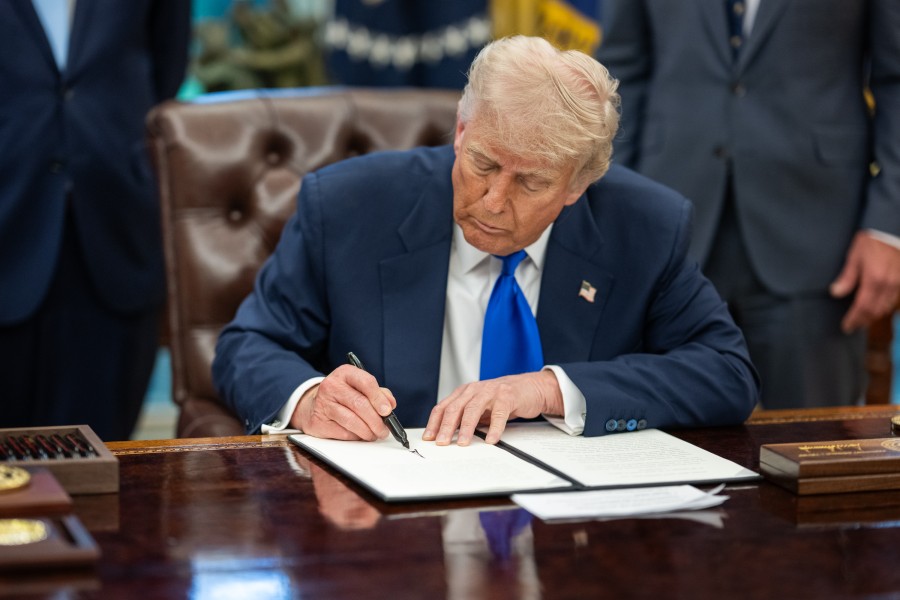
In a recent statement from the White House, US President Donald Trump emphasized the nation’s readiness to intensify actions against Iran should it fail to adhere to agreements designed to curb its nuclear ambitions. Trump underscored that preventing Iran from acquiring nuclear weapons remains a critical US objective, citing the dangers of nuclear proliferation as outweighing any potential economic impacts. He affirmed the US commitment to take decisive steps if Iran does not meet its obligations or engages in activities threatening regional peace.
A significant highlight of Trump’s address was the reopening of the Strait of Hormuz, a crucial passage for global energy and trade. This development is hailed as a substantial achievement for international markets, given the strait’s vital role in the transportation of oil and natural gas worldwide. The announcement comes amid delicate diplomatic engagements between Washington and Tehran following a recently signed memorandum of understanding. This agreement touches on maritime security and sanctions relief, with talks on Iran’s nuclear activities set to continue over a designated 60-day negotiation window.
US Vice President JD Vance added that Iran has consented to allow International Atomic Energy Agency inspectors back into the country, labeling it as a pivotal advancement in ensuring that Iran does not develop nuclear weapons. However, Iranian representatives have contested this assertion, indicating no new commitments concerning their nuclear program have been established. Iranian negotiators stress that discussions are still in progress, linking broader regional concerns, such as maritime security and sanctions relief, with the ongoing negotiations.
Despite US claims of restored energy flows through the Strait of Hormuz reaching normal levels, independent shipping data points to vessel traffic remaining below pre-conflict figures. This discrepancy highlights persistent uncertainties regarding shipping activities in the region. Meanwhile, regional tensions continue, involving key players like Iran, Israel, and Lebanon. Israeli authorities have expressed apprehension about the current diplomatic efforts, arguing that they do not sufficiently address Iran’s nuclear and missile capacities.
The US maintains its strategic aim of preventing Iran’s acquisition of nuclear weapons while seeking to uphold regional stability through a combination of diplomacy and deterrence. As negotiations advance, the international community watches closely, aware of the complex dynamics at play and their potential implications for global security.