
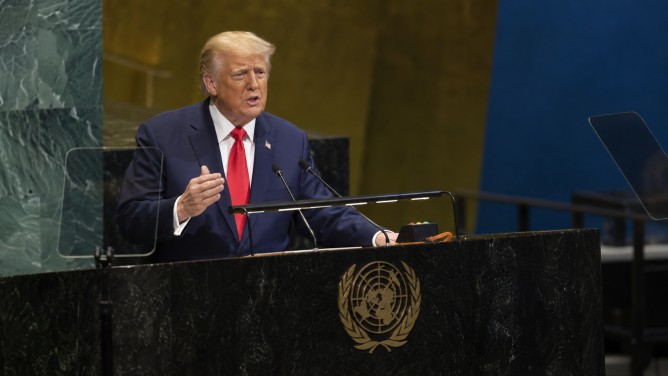
In the face of escalating tensions with Iran and ongoing unrest in Gaza, the international community is poised to see the impact of U.S. President Donald Trump’s upcoming address to the United Nations General Assembly. His speech is expected to focus on justifying recent military actions against Iran and emphasizing diplomatic efforts aimed at resolving the Gaza conflict, which continue to have significant economic and geopolitical ramifications, particularly concerning the vital Strait of Hormuz.
President Trump is anticipated to assert that his administration’s strategies have bolstered the United States’ international standing, portraying himself as a leader adept at balancing military prowess with diplomatic initiatives. The speech is timely, given the persistent disruption in the Strait of Hormuz, a crucial maritime passage for global oil shipments, and the complex dynamics in Gaza, where efforts towards disarmament and reconstruction have seen limited advancement.
As part of his UN visit, Trump will also engage with various world leaders, including Ukrainian President Volodymyr Zelenskyy and Japanese Prime Minister Sanae Takaichi, potentially shaping future diplomatic relations. These meetings underscore the broader foreign policy objectives of the Trump administration, which have been marked by a blend of assertive military action and selective diplomatic overtures.
Additionally, Trump’s address will offer insights into his administration’s stance on international institutions, including the United Nations itself, which he has frequently criticized. This could further outline his administration’s approach to multilateral cooperation and global governance.
In the broader context of the UN General Assembly, Secretary-General António Guterres is expected to highlight pressing global issues, including international conflicts and the rapid advancements in artificial intelligence, setting the stage for a comprehensive discussion on global priorities and challenges.