
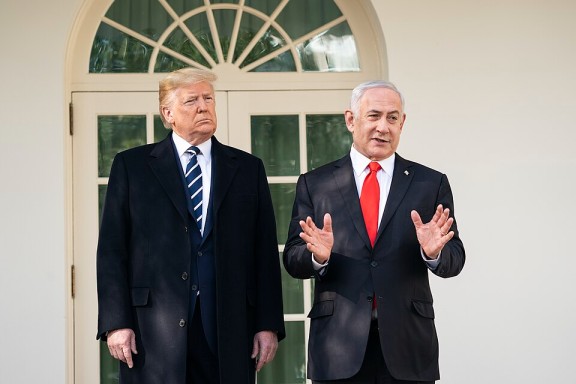
On Sunday evening, Prime Minister Benjamin Netanyahu engaged in a conversation with U.S. President Donald Trump, focusing on the ongoing conflict with Iran. This dialogue took place following Trump’s recent visit to China, where discussions likely touched on strategic matters related to the Middle East. Netanyahu, afterward, was scheduled to hold a crucial security meeting with top aides and ministers in Jerusalem, a gathering often referred to as the “small security cabinet.” This group typically includes key figures such as Foreign Minister Gideon Sa’ar, Defense Minister Israel Katz, and Finance Minister Bezalel Smotrich, among others. The meeting comes amid reports of Israel and the U.S. preparing to potentially resume attacks on Iran, following a recent drone strike on a nuclear facility in the UAE, an incident attributed to Iran.
President Trump is preparing for a Situation Room meeting with his top national security advisers to evaluate military options concerning Iran. Despite stalled negotiations, Trump maintains that Iran is interested in reaching a deal, though he issued a stark warning to Iran’s leaders about the urgency of their actions. In a social media post, he emphasized that time is critical for Iran to act, suggesting severe consequences if they fail to comply. Netanyahu, in his weekly cabinet meeting, indicated attentiveness towards Iran’s actions and expressed anticipation of insights from Trump’s trip to China, which could influence the ongoing situation.
During Trump’s recent summit with Chinese President Xi Jinping, Xi reportedly offered assistance in reopening the Strait of Hormuz, a vital channel for global oil shipments, while pledging not to support Iran militarily. Following his return from China, Trump shared an AI-generated image depicting stormy seas, a symbolic gesture that some interpret as foreshadowing potential conflict escalation. Additionally, Trump, in conversations with media outlets, reiterated his belief that Iran desires a deal and is expected to present an updated proposal soon. However, he cautioned that failure to meet U.S. demands regarding their nuclear program would result in severe repercussions.
From Tehran, Iranian officials issued warnings against renewed U.S. attacks. Iran’s armed forces spokesman cautioned that any aggression would be met with unprecedented and tumultuous responses. Meanwhile, Iran’s deputy speaker of parliament highlighted potential retaliation targeting global oil supplies if Iranian oil infrastructure is threatened. The ongoing negotiations have seen Iran demanding the lifting of U.S. sanctions and an end to the U.S. naval blockade, among other stipulations, while the U.S. presented conditions including limitations on Iran’s nuclear sites and uranium stockpile.
In a related event, a drone strike near the Barakah Nuclear Power Plant in Abu Dhabi caused a fire, sparking concerns globally. Despite the incident, no injuries were reported, and radiation levels remained stable, according to local authorities. The UN’s nuclear watchdog expressed grave concern over the attack, emphasizing the unacceptability of military actions endangering nuclear safety. Although the origin of the drone remains unconfirmed, the UAE has previously accused Iran of targeting its infrastructure. During the conflict, Netanyahu reportedly visited the UAE, although the visit was officially denied by UAE authorities. The UAE and Saudi Arabia have also reportedly joined military actions against Iran, alongside the U.S. and Israel.