
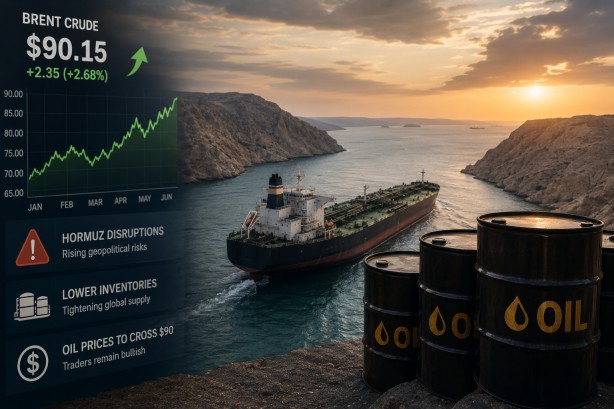
Oil markets have seen a significant uptick, with prices marking their most substantial weekly increase since April. However, analysts suggest that for Brent crude to surpass the $90 per barrel threshold, there would need to be an extended disruption in the Strait of Hormuz or definitive indications of a tightening global supply. As of Friday, Brent crude was hovering around $85 after an approximate 11% rise over the week. Meanwhile, the US benchmark, West Texas Intermediate, was nearing $80. This surge in prices comes amidst renewed tensions involving the United States and Iran, which have impacted Middle Eastern supply routes and led to a reduction in tanker traffic through the critical Strait of Hormuz.
Despite the regional tensions, Brent crude has not managed to breach the week’s peak of $87.55 per barrel. Observers in the market note that traders are still holding out hope for diplomatic measures to avert a prolonged crisis. The Strait of Hormuz remains a focal point for energy markets, given that about 20% of the world’s oil supply navigates through this passage. Currently, tanker movements have decelerated, and shipping companies are keeping a close watch on the security dynamics in the area.
The repercussions are already being felt, particularly in the fuel markets. In the US, refining margins have seen an uptick as diesel and gasoline supplies tighten. Similarly, European fuel markets are experiencing mounting pressure. The situation is exacerbated by additional disruptions to Russian exports, which have intensified concerns regarding global supply.
Analysts maintain that oil prices are unlikely to break decisively past $90 unless there is a significant decline in inventories or if tensions between Washington and Tehran escalate further, potentially leading to a prolonged disruption of shipments through the Strait of Hormuz. Currently, traders are fixated on diplomatic developments and supply data, which are expected to dictate the next major move in the global oil markets.